About
She trained as a lawyer. Her law practice was brief, comprising court attachment and chambers attachment at the law firm of F.R.A. Williams. She had wanted to be a diplomat, until a visit to the Ministry of Foreign Affairs — a stench in the corridor, a red carpet turned brown — convinced her that was not where the business of diplomacy would be done well.
She walked into a newsroom instead, with no broadcast training and, in her own words, knowing neither one end of it from the other. She decided that if she was going to be in the business, she would have to be better than the best.
Within a year she had broken the story that made her.
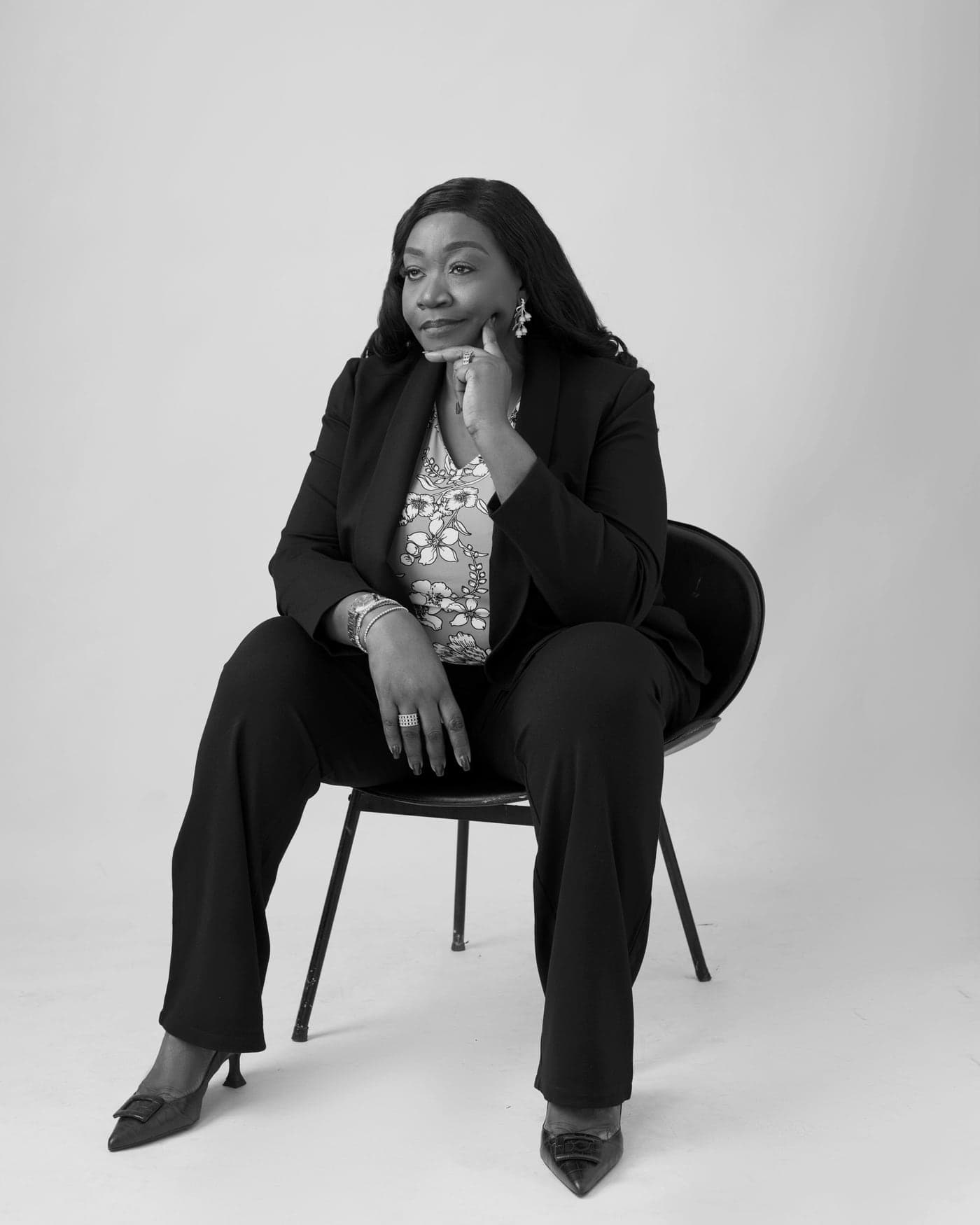
01
The making of a reporter
On 7 November 1996, a passenger aircraft crashed at Itoikin, near Ejirin, 34 nautical miles from Lagos. She followed the story to the water’s edge, went live that night, and became, in newsroom shorthand, the Ejirin reporter. Her own account of that night is told in Dispatches.
What followed were six years that would be formative for any journalist. She became the station’s foreign affairs correspondent and pioneered diplomatic reporting there, producing and presenting a weekly programme on diplomacy and another on the judiciary, human rights and the agitation for a return to civil rule.
She covered the wars across the West African sub-region (Liberia, Sierra Leone, Guinea, Guinea-Bissau, Côte d’Ivoire and Mali), alongside ECOWAS, African Union, United Nations and Commonwealth proceedings. She reported the extradition of Charles Taylor to face war crimes charges, the humanitarian crises in Niger and Chad, and elections and inaugurations across the region.
At home she covered the extrajudicial killings of pro-democracy activists, the incarceration of journalists, the communal killings at Modakeke, the unrest in the Niger Delta from Odi to Choba, the trial of coup plotters, and the prolonged trial of the Chief Security Officer to General Sani Abacha. She covered the deaths of Abacha and of MKO Abiola, and the political activity that carried Nigeria to the inauguration of Olusegun Obasanjo in 1999.
02
From reporting the news to running it
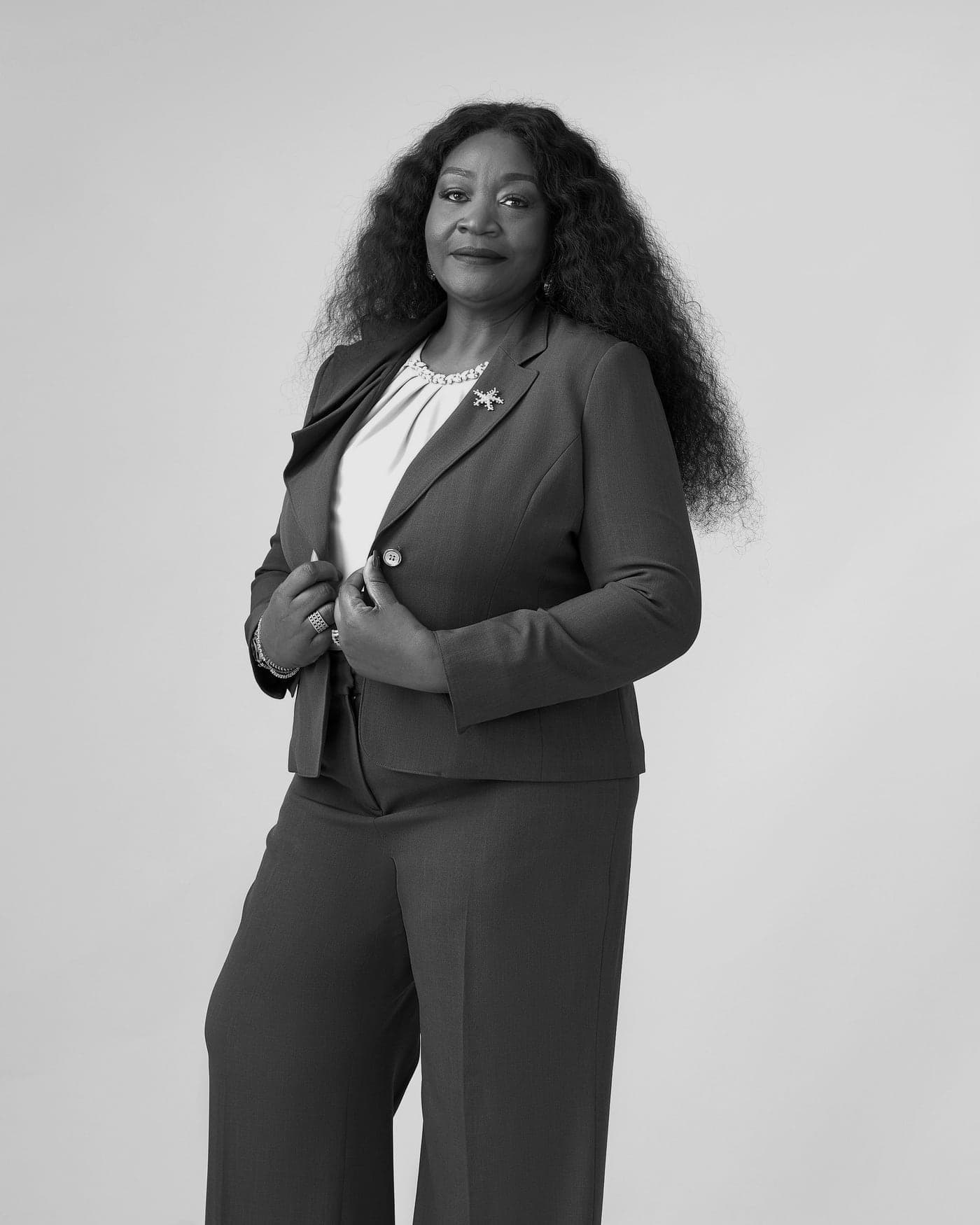
In 2002 she left Channels. After a period as spokesperson for the Miss World pageant in Nigeria, including the crisis communications that followed the rioting, she joined Silverbird to build its television news operation from nothing.
She recruited the first ten staff, wrote the on-air style guide, and grew the operation from a single station to six, with regional bureaux.
At Minaj Broadcast International she took on group content and quality control across news, sport, business, features and documentary, and the station swept the Nigerian Media Merit Awards, taking Station of the Year, Best Newscaster and Best Production.
She returned to Silverbird to establish its twenty-four-hour news channel, and later consulted for Plus TV Africa, NN24, LTV and News Central, in each case to rebuild newsroom operations, retrain staff and reposition the channel.
03
Standards at scale
From 2018 she served as Director of News and Editor-in-Chief at TVC Communications, with strategic oversight of one of Nigeria’s foremost broadcast news operations.
She was responsible for news teams of at least 150 staff across all thirty-six states, and led the strategic plan behind a two hundred per cent increase in viewership over four years. The channel was named Television Station of the Year at the Nigerian Media Merit Awards twice.
She led coverage of the 2019 and 2023 general elections and the Ondo State election, the funeral of former Head of State General Muhammadu Buhari, insurgency across the North Central, North West and North East, and the national protest movements of 2020, including live coverage of #EndSARS.
In 2025 she served as Executive Director of News at NTA.
04
Credible media, properly built
Her conviction, held across three decades and every newsroom she has run, is that a credible and well-structured media is not a luxury of a functioning democracy but one of its preconditions.
That has meant insisting on editorial governance where none existed, writing the policies and style guides that outlast any individual editor, and refusing the shortcuts that make a bulletin easier and a country worse informed.
It has also meant people. She has spent as much of her career training journalists as reporting stories, with particular attention to the women coming up behind her in a field that has not always made room for them.
Education and standing
- LLB (Hons), University of Kent
- Called to the Nigerian Bar, 1995
- Nnamdi Azikiwe Fellow, 2001: a six-week programme in the United States, September to November 2001
- Mashav Scholar, State of Israel, 2001
- BBC Advanced Media Managers course. Mayborn School of Journalism, Denton, Texas.